
Is Using an AI Resume Builder Cheating? (And Is It Worth It?)
"I don't want to sound like a robot."
This is the most common fear candidates have about using AI tools like ChatGPT, Claude, or purpose-built AI Resume Builders.
But here's the reality check:
Recruiters are already using AI to screen you. They use algorithms to parse your resume, search for keywords, and rank your application.
If they are bringing a bazooka to a knife fight, why are you still using a dull knife?
In this guide, we'll break down the pros, cons, and ethics of using AI to write your resume—and how to do it without sounding fake.
How AI Resume Builders Actually Work
Modern tools (like Answerly) don't just vomit out generic text. They work in three steps:
- Scan the Job Description: The AI reads the requirements (e.g., "Must have experience with React and Node.js").
- Analyze Your Experience: It looks at your raw notes or old resume.
- Tailor the Content: It rewrites your bullet points to highlight specifically how you meet those requirements.
It's not inventing experience; it's translating your experience into the language of the employer.
The Pros: Why You Should Use AI
1. Beat Writer's Block
Staring at a blank page is painful. AI gives you a solid first draft in seconds. You can edit, tweak, and polish, but the heavy lifting is done.
2. Pass the ATS (Applicant Tracking System)
AI tools are trained on thousands of successful resumes. They know exactly which keywords to include and where to place them to ensure you get a high match score.
3. Save Hours per Application
Tailoring a resume manually takes 30–60 minutes per job. With AI, it takes 5 minutes. If you're applying to 10 jobs a week, that's 5+ hours saved.
4. Objective Feedback
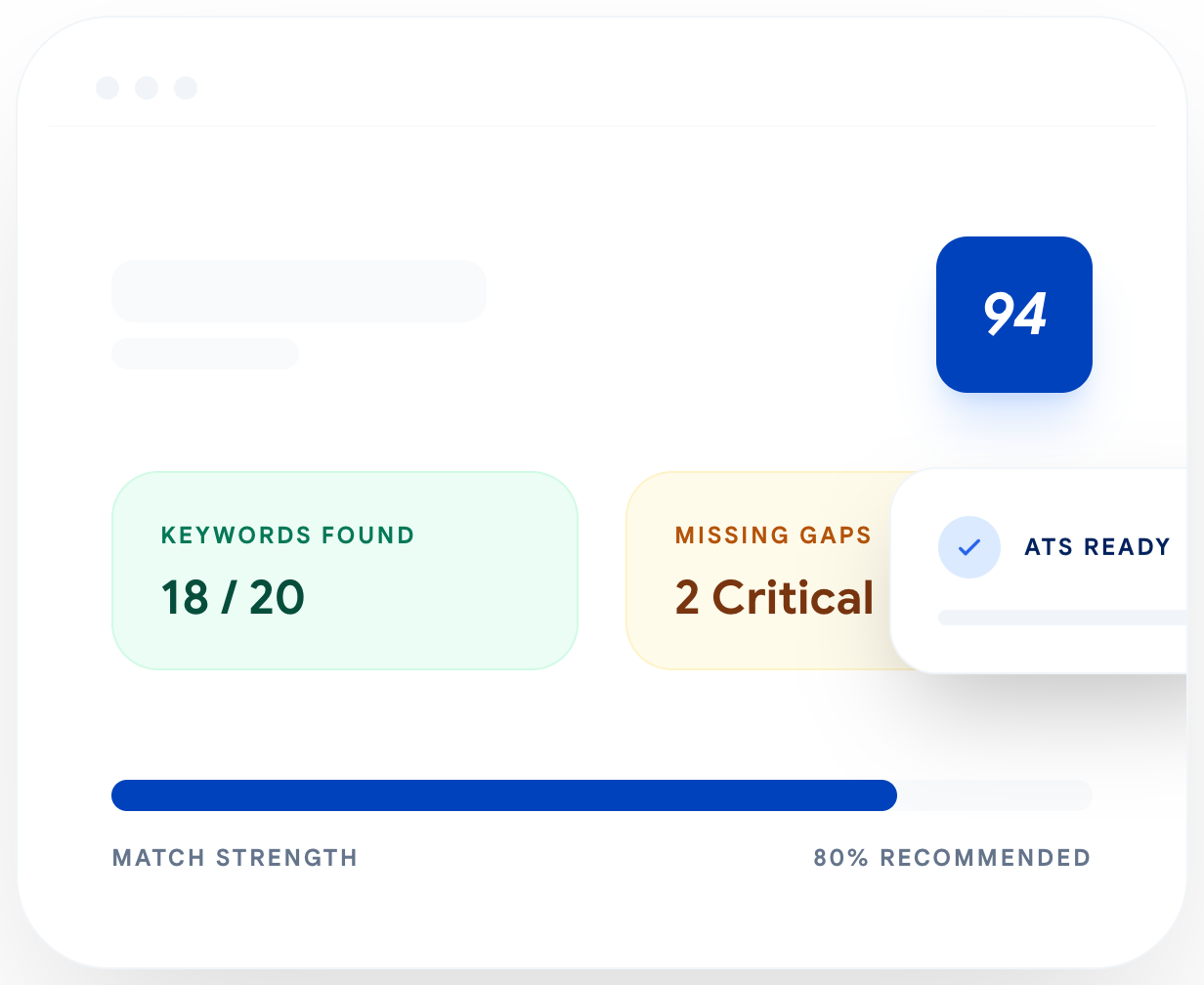
Tools like our ATS Resume Checker give you an unbiased score. It won't sugarcoat it if your formatting is broken or your skills are missing.
The Cons: Where AI Fails
1. Hallucinations (Lying)
If you ask ChatGPT to "write a resume for a Senior Developer," it might invent a degree from Stanford you don't have. Always proofread every single line.
2. Generic "Robot" Tone
Phrases like "Results-oriented professional with a proven track record" are AI hallmarks. They mean nothing.
The Fix: Use AI for structure and keywords, but inject your own voice and specific metrics (e.g., "Increased sales by 20%").
Is It Cheating?
No.
A resume is a marketing document, not an essay test. Employers don't care who typed the words; they care if the words are true and if you can do the job.
Using AI to clarify your achievements is smart. Using AI to lie about skills you don't have is fraud.
How to Use AI the Right Way
- Start with a brain dump. Write down all your achievements, metrics, and skills in a messy list.
- Feed it to the AI. Ask it to "Rewrite these bullets to be more impactful and include keywords from this job description: [Paste JD]."
- Review and Refine. Read it out loud. Does it sound like you? If not, rewrite the adjectives.
- Check the Score. Run the final version through a Resume Keyword Matcher to ensure you didn't miss anything critical.
Verdict: Is It Worth It?
Yes.
In a competitive market, you need every advantage you can get. An AI resume builder is the most powerful tool in your arsenal. It levels the playing field against the bots and helps you present the best version of yourself.
Ready to upgrade your application? Try our AI tools for free and see the difference.